The brand contacts you. Or you him. In any case, the next step is to send them a media kit. And this is exactly where many influencers lose the business they already had in their pocket.
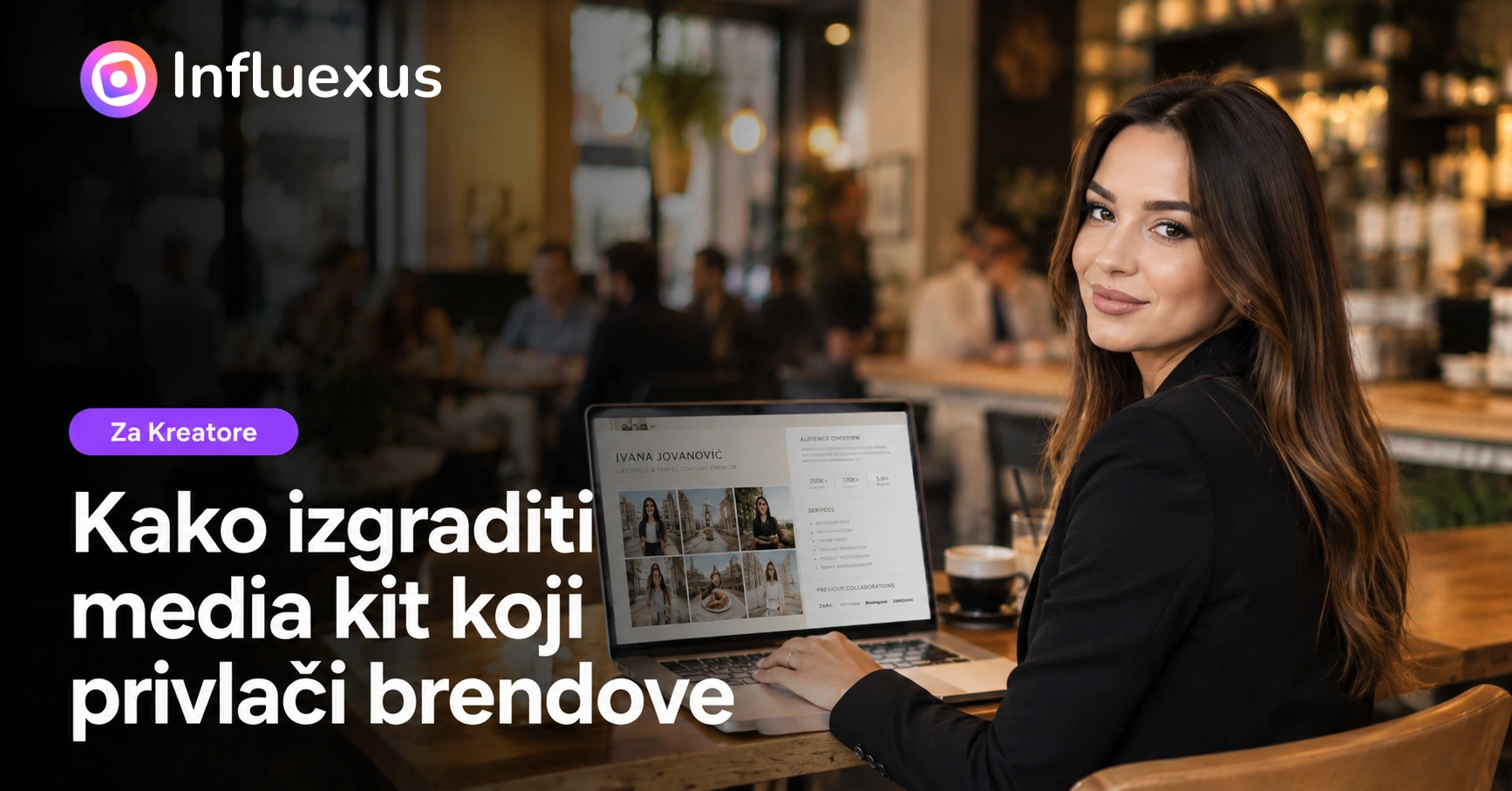
Media kit is your business card in the business sense. It's not just a presentation with numbers, it's proof that you know what you're doing, that you take your work seriously and that you're a professional worth working with. The brand should receive everything it is interested in in one document, without additional questions.
This guide will show you exactly what to include, how to present it, and what to stay away from.
What is a media kit and why you need it
A media kit is a document (most often a PDF) in which an influencer or content creator presents himself, his audience and his offer to brands. Think of it as a CV, but for collaborations.
Brands and marketing managers receive dozens of messages from creators every day. Whoever submits a neat media kit immediately moves to the next level of consideration. The one who only sends a link to an Instagram profile and says "here I am, I'm in touch" usually remains unanswered.
Why media kit is important: Brands don't have time to research your profile, look at every post and manually calculate your engagement rate. The media kit prepares it for them and accelerates their decision in your favor.
7 elements every media kit must have
It's not a matter of the media kit being long. The point is to make it complete. Here's what the marketing manager looks for when he opens your document:
| Element | Mandatory? | What should be included |
|---|---|---|
| Short bio | ✓ | Who are you, what do you do, what is your niche (3-5 sentences) |
| Profile statistics | ✓ | Number of followers, engagement rate, average reach per post |
| Audience demographics | ✓ | Age, gender, location, interests (screenshot from analytics) |
| Content types | ✓ | Reels, Stories, static posts, YouTube, TikTok |
| Price list and packages | ✓ | Clear pricing or price range by content format |
| Previous collaborations | ★ | Brand logos, short description, results if you have them |
| Contact | ✓ | Email, Instagram handle, still some form of direct contact |
1. Short bio that immediately tells who you are
Don't talk about how long you've been on Instagram. Tell the brand why your audience is relevant to them. For example: "I create content about healthy eating and fitness for women between the ages of 22 and 35 in the region. My audience actively seeks recommendations for supplements, equipment and lifestyle brands."
That's far more useful than "Hello, I'm Lejla, a blogger from Sarajevo who loves sports and travel."
2. Statistics, but real
Engagement rate is key. Brands are increasingly ignoring the number of followers and looking at how active your followers are. The formula is simple:
ER = (Likes + Comments) ÷ Number of followers × 100
The average ER on Instagram is about 1-3%. Anything above 5% is excellent and should be highlighted. If you have a micro profile with 8,000 followers and an ER of 9%, that's a stronger argument than a profile with 80,000 followers and an ER of 0.8%.
3. Audience Demographics
A screenshot from Instagram Insights or TikTok Analytics is enough. Brands want to see that your audience matches their target group. If you sell sports equipment and your audience is 70% women between the ages of 20 and 35 interested in fitness, that's obvious.
4. Price list that does not annoy
Many influencers avoid writing prices in the media kit because they think that it limits them in negotiations. In reality, clear pricing speeds up the process and filters out brands that can't afford your level.
You can write a range (eg "Story set: €150-250") or a fixed price. The more transparent, the more professional.
Tip: Create packages, not just individual price per format. E.g. "Starter package: 2 Stories + 1 Reel = €400". Bundles increase the average value of the collaboration and are easier to sell than ala carte items.
5. Previous collaborations
If you have already worked with brands, show it. Even one good collaboration that had measurable results (number of clicks, promo code used, screenshot feedback from the brand) is worth more than ten enumerated logos without context.
If you have no previous collaborations, skip this part. It is better to omit a section than to leave it empty or filled with false information.
Design that doesn't repel
A media kit must look visually neat, but it doesn't have to be the work of a graphic designer. Here are the rules to follow:
- Maximum 2-3 colors that are consistent with your profile branding
- Legible font at least 11pt size for body text
- Sufficient white space between elements, don't cram everything on one page
- High-quality photos of you and samples of your content
- PDF format that doesn't depend on third party software
Errors that turn brands away: Too much unstructured text, outdated data (media kit from last year with numbers that don't match the profile), poor quality screenshots, and hard to read font. All this tells the brand that you are sloppy at work.
Media kit creation tools
You don't need expensive software. Here are the most popular options:
- Canva: Has ready-made media kit templates, free, easy to use
- Adobe Express: Slightly more advanced design options, also free in the base
- Google Slides / PowerPoint: If you like control over the layout, this is a solid option
- Notion: Web-based version of the media kit, practical for sending a link instead of a PDF
How and when to send a media kit
A media kit is sent when the brand expresses interest in cooperation, or as an attachment to your first message when you contact the brand. It is not sent in the first cold message without context.
A good order of contact looks like this:
- First message: a short explanation of why you are relevant to that brand (1-3 sentences)
- If they show interest: send a media kit with a specific offer
- Follow-up after 5-7 days if there is no response
Pro tip: Customize the media kit to each the brand you contact. Not all adjustments are big, sometimes it's enough to change the opening sentence to emphasize why your audience is perfect for their product.
Influexus profile as your digital media kit
Placing a media kit on Influexus, the unique platform for influencers and UGC creators in the Balkans, means that brands can find it themselves, without you contacting them first.
Your profile on Influexus shows brands all the key information: niche, platforms you are active on, packages you offer and prices. Brands search for creators based on those criteria and send offers directly to those who match their campaign.
Instead of sending you hundreds of cold messages, brands come to you. And the payment is protected by the escrow system: the brand pays in advance, and you receive the money as soon as the job is confirmed and approved.