Every marketing manager managing a budget in the Balkans faces the same question: give money to Facebook/Instagram ads that offer measurable targeting, or invest in influencer marketing that builds trust but is more difficult to accurately measure? The answer is not binary. Both channels have their strengths and weaknesses, and the smartest brands combine them.
This text breaks down both channels into concrete figures, scenarios and recommendations specific to the Balkan market, without general advice that applies to the UK or USA markets.
Facebook and Instagram ads in the Balkans: What the numbers say
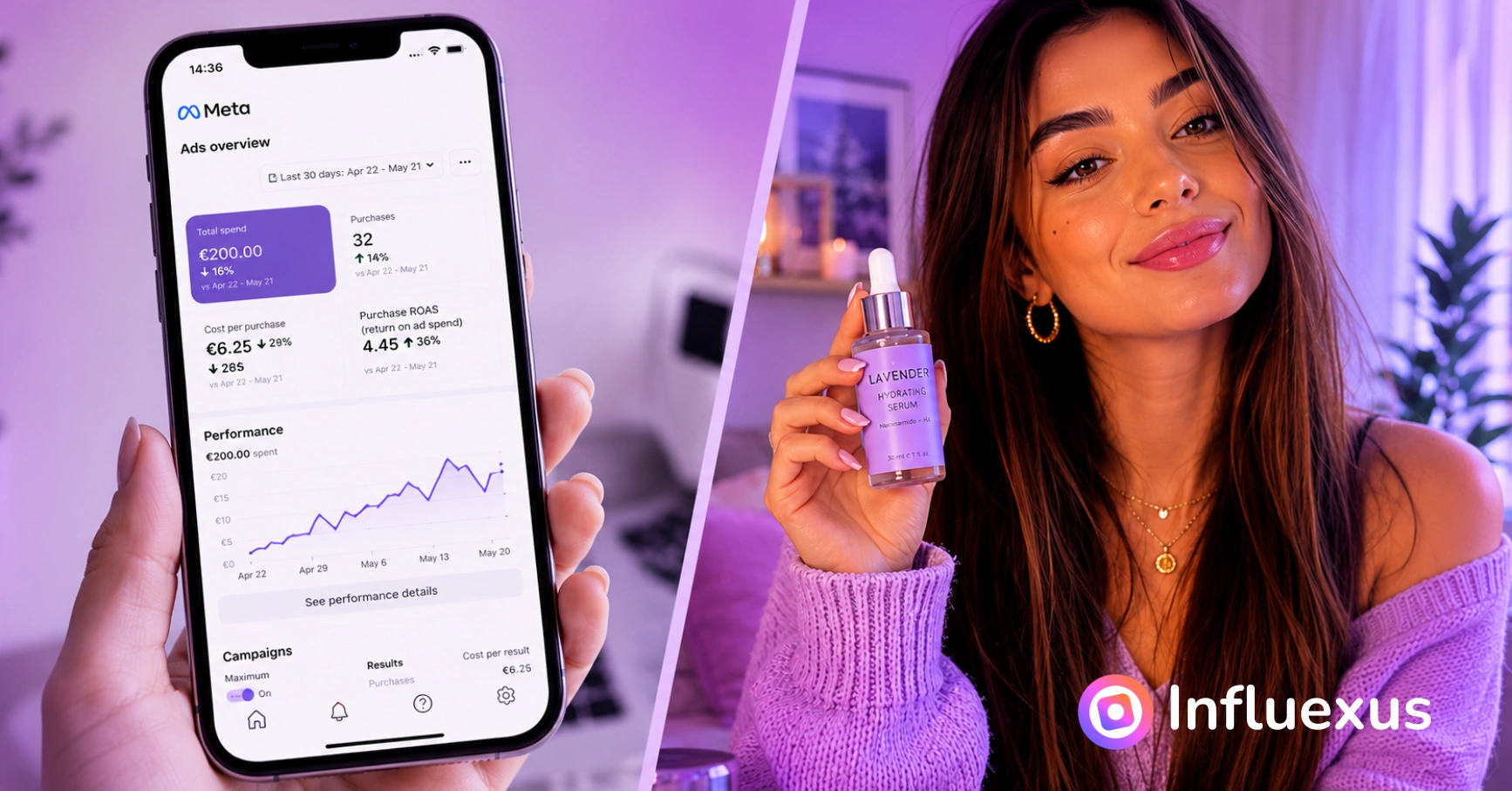
Meta ads are still the dominant direct response channel in the Balkans. The platform offers precise targeting by location, age, interests and behavior, and the analytics are detailed and in real time.
Average costs in the Balkans (2025/2026)
| Metric | Bosnia and Herzegovina | Serbia | Croatia |
|---|---|---|---|
| CPM (1,000 views) | 2 to 5 EUR | 2 to 6 EUR | 4 to 10 EUR |
| CPC (cost per click) | 0.10 to 0.45 EUR | 0.12 to 0.50 EUR | 0.20 to 0.80 EUR |
| Avg. CTR (feed ad) | 0.8 to 1.5% | 0.9 to 1.6% | 1.0 to 2.0% |
| Conversion (e-commerce) | 1.5 to 3% | 1.5 to 3% | 2 to 4% |
At first glance, Meta ads look good. However, there are several factors that are changing the picture for brands in these markets.
Influencer marketing in the Balkans: Real ROI
Influencer marketing is more difficult to measure in real time, but that does not mean that the results are not concrete. Here's what happens when a brand hires a relevant creator in the right niche:
What influencer marketing offers that an ad can't
- Social proof: The audience trusts the recommendation of the influencer they follow because they see them as friends, not as a brand that pays for advertising.
- Content that stays: An influencer's video or post stays on the profile and continues to attract views and clicks for weeks after publication.
- Authentic voice: When a creator talks about their product in their vocabulary, it doesn't sound like an advertisement. Audience does not immediately move on to other content.
- UGC rights: Content created by an influencer can be used as creative in paid ads, reducing production costs.
Measurable indicators of influencer campaign
| KPI | Nano influencer | Micro influencer | Macro influencer |
|---|---|---|---|
| Reach / follower | 15 to 30% | 10 to 20% | 3 to 8% |
| Engagement rate | 8 to 15% | 3 to 8% | 0.5 to 2% |
| CTR (link in bio/story) | 2 to 8% | 1 to 4% | 0.3 to 1% |
| Conversion (Promo Code) | 1 to 5% | 0.5 to 3% | 0.1 to 0.8% |
Direct comparison: 300 EUR in both channels
Let's look at a concrete example. The brand has 300 EUR. What is the better choice?
Facebook / Instagram ad
- + Precise targeting by location, age, interests
- + Measurable in real time (ROAS, CPA)
- + Easy to scale the budget when the campaign works
- + A/B testing creative and audience
- - Audience knows the ad, trust lower
- - Content disappears when the budget ends
- - Ad fatigue: CTR decreases over time
- - You need creative, otherwise the results are weak
Influencer marketing
- + High engagement and trust of the audience
- + The content remains and continues to work for you
- + UGC material for further paid ads
- + Brand awareness in relevant niche
- - Harder to track direct conversions without code
- - Finding the right influencer takes time
- - No guaranteed reach (algorithm)
- - Needs trust and creator management
Result with 300 EUR in each channel
| Metric | Facebook ad (300 EUR) | 3 nano influencers (300 EUR) |
|---|---|---|
| Reach | 50,000 to 100,000 | 15,000 to 30,000 |
| Clicks | 600 to 1,500 | 400 to 1,200 |
| Conversions (est.) | 12 to 30 | 8 to 40 |
| Audience Trust | Low (Ad) | High (Recommendation) |
| Content remains | No (shut down with budget) | Yes (influencer profile) |
| UGC material for reuse | No | Yes (3 videos) |
Influencer conversions have such a wide range because they directly depend on the niche and quality of selection. The right creator in the right niche can convert far better than the average Facebook ad. The wrong creator converts less.
The golden combination: Influencer + Paid Ads
The most successful brands in the Balkans do not choose between these two channels, but combine them. Here's how it looks in practice:
- Engage 3 to 5 nano or micro influencers in a relevant niche to create authentic video content about your product.
- Influencers post on their profile and get organic reach from their own audience. It tracks which content has better engagement.
- Get top-performing video and run it as a paid ad on Facebook and Instagram, targeting the lookalike audience of that influencer's followers.
- UGC video in the ad achieves 3 to 5x higher CTR than a standard brand video because it looks organic, not like an advertisement.
- Retarget visitors who clicked but did not buy with a classic remarketing ad with a discount or a call to action.
"Influencer gives trust and authentic content. Paid ad gives reach and precision. Together they give what every brand wants: customers who believe in the product they buy."
When to use which channel
Choose Facebook/Meta Ads when:
- You have a clearly defined target audience and precise demographic criteria
- You are retargeting visitors who have already been on the site
- You have a product with a short decision cycle (impulsive purchase under 50 EUR)
- You need measurable conversions in a short period of time
- You are testing multiple versions of the offer or creative
Choose influencer marketing when:
- You are launching a new brand or product that the audience does not know
- You are selling a product that requires an explanation or demonstration
- You need content that you can use both in ads and on the website
- Your product is in areas such as fitness, beauty, food, lifestyle or parenting
- You build long-term brand credibility, not just short-term sales
How to measure the ROI of influencer campaigns in the Balkans
Measuring influencer ROI is not as complicated as it seems. Here is the minimum set that every brand needs:
- Unique promo code per influencer (eg AMINA15) tracked in the e-commerce system
- UTM link per influencer which goes to Google Analytics, tracks sessions, sales and revenue
- Screenshot Insights from influencer 48 hours after publication (reach, impressions, clicks)
- Period comparison in GA4: sales in campaign week vs. previous week of the same length
The Influexus platform automates the monitoring of these metrics through an internal dashboard. Brands see reach, engagement and conversions per creator without manual data collection.
Conclusion
Facebook ads and influencer marketing are not competitors but complementary tools. For brands in the Balkans who are just starting out, influencer marketing offers a better entry into the market because it builds trust and generates content that works further. For brands that already have brand awareness and need to scale sales, Meta ads are an indispensable channel.
The real ROI comes when the two channels come together: the influencer generates an authentic UGC video, and the paid ad amplifies it to a precisely targeted audience. The result is higher CTR, lower CAC and customers who buy because they believe in the product, not just because the ad caught them at the right time. The
Influexus platform allows brands to find the right creators, manage a campaign and get UGC content ready for paid amplification, all in one place.