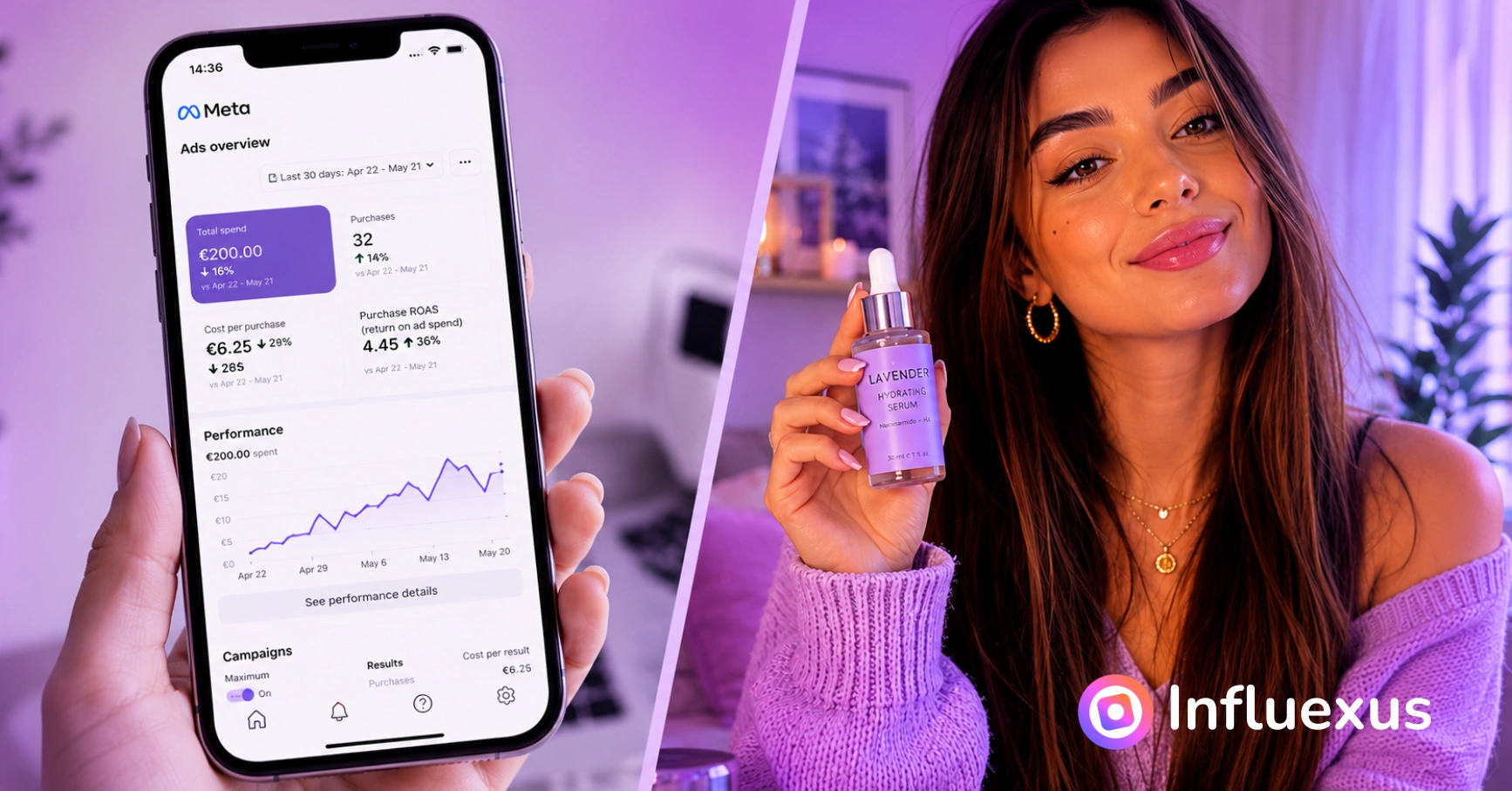
Online a store that has not tried influencer marketing usually lives on Facebook and Instagram ads. It works up to a certain limit. The problem is that the cost per click is constantly increasing, the audience develops "banner addiction" and it becomes more and more expensive to attract a new customer through a paid ad.
Influencer marketing solves a different problem. Instead of paying for attention, you pay for trust. When a creator followed by 15,000 people in BiH says "I bought this and it's really good", it carries a different weight than a banner ad with the same message.
But influencer marketing for ecommerce only works when set up correctly. This guide walks you through all the steps, from choosing a creator to measuring sales.
The creator talks about the experience of collaborating with brands through the Influexus platform.
Why influencer marketing works better than online store ads
Facebook and Instagram ads show your product to people who weren't looking for it. It's interrupt marketing, interrupting someone in the middle of scrolling and asking them to buy something. Every advertising platform does this, so the audience becomes resistant.
Influencer content works differently. A follower who daily watches a creator who follows lifestyle, fashion or fitness comes into contact with your product through a person they trust. It's not an ad, it's a recommendation from a friend with several thousand followers.
This is particularly important for the Balkan market. Buyers in Bosnia and Herzegovina, Serbia and Croatia have a high level of skepticism towards ads, but respond very well to recommendations from local creators they follow. Localization is key.
Which formats drive direct sales
Unboxing and haul videos
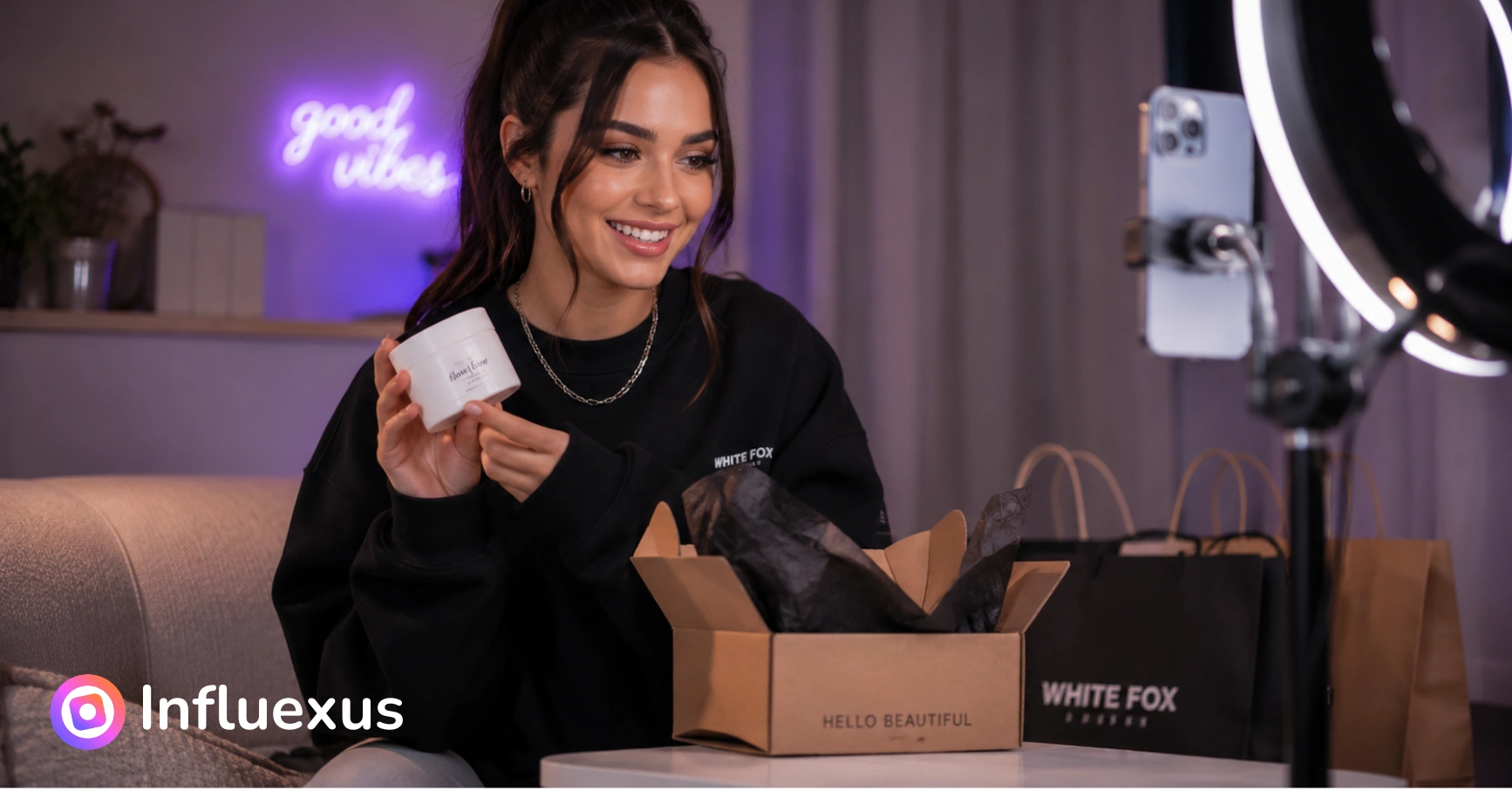
This is the highest converting format for ecommerce. The creator orders or receives your product, opens it in front of the camera and gives an honest comment. The customer sees the product in a real context, sees the packaging, sees the actual size and appearance. There are no surprises when ordering, which reduces returns and increases customer satisfaction.
Unboxing works especially well on TikTok and Instagram Reels. Short, 30 to 60 seconds, enough to show key details. The creator should be honest, including small flaws, because a perfect review without a single "but" looks like a paid advertisement, and customers recognize it immediately.
Stories with a promo code or link
Instagram and TikTok Stories with a promo code are one of the easiest formats to measure. The creator publishes a slide with your product, includes a swipe up or a link in the bio and adds a unique discount code. Any order with that code is directly attributed to the creator.
This format works well for impulse purchases, especially for products up to 50 EUR. Short, visual, with a clear call to action. A discount of 10 to 15% further motivates the customer to use that link.
YouTube reviews and tutorials
YouTube brings slower but better sales. A customer who comes from a YouTube review has usually researched the product, compared the options, and is ready to buy. The conversion is higher and the return is lower.
For ecommerce brands, YouTube works especially well for more complex products: technology, cosmetics with clearer routines, sports equipment, kitchen appliances. The creator has space to show all the details, answer frequently asked questions and place an affiliate link in the description of the video.
TikTok Live and Instagram Live
Live format is the most direct path from presentation to purchase. The creator demonstrates the product, answers questions in real time and shares a promo code. The customer can ask everything he is interested in. Live shopping is a trend that accounts for 20 to 30 percent of ecommerce revenue in Asian markets and is slowly coming to the Balkans.
How to track sales from an influencer campaign
Without tracking, you don't know what's going on. This is the biggest mistake of ecommerce brands doing influencer marketing. They pay the creators, they don't track the results and in the end they can't tell if the campaign was profitable.
Unique promo codes
The simplest method. You give each creator a different code: KREATOR10, ANA15, BELMA20. Every order with that code in your system is attributed to that creator. It is easy to implement, easy to measure, and gives the customer a concrete benefit in the form of a discount.
UTM parameters in links
Create a unique link for each creator with UTM parameters (utm_source, utm_medium, utm_campaign) and track conversions in Google Analytics or your ecommerce analytics. A precise method, but requires the creator to use exactly that link without modification.
Affiliate links
The creator gets a special affiliate link that automatically tracks clicks and sales. The fee can be fixed plus a percentage of each sale. This model motivates creators to actively promote your product because their earnings are directly tied to results.
How much should you invest for a positive ROAS
There is no single answer, but there is a formula. Count backwards from margin, not follower count.
| Creator type | Followers | Estimated price (Story + Reels) | Estimated conversions |
|---|---|---|---|
| Nano | 1,000 to 10,000 | 50 to 150 EUR | 5 to 20 sales |
| Micro | 10,000 to 50,000 | 150 to 500 EUR | 15 to 60 sales |
| Mid-tier | 50,000 to 200,000 | 500 to 2,000 EUR | 40 to 200 sales |
| Macro | 200.000+ | 2,000 EUR+ | 100 to 500+ sales |
These numbers are indicative and vary widely depending on niche, audience engagement and product. Nano and micro creators with highly relevant audiences often deliver better ROAS than macro creators with general audiences.
Which creators work for ecommerce brands in the Balkans
Niche relevance is important for ecommerce, not just the number of followers. Look for creators whose audience matches your customer.
- Fashion and clothing brands: lifestyle creators, fashion, OOTD (outfit of the day) profiles on Instagram and TikTok, especially women 20 to 35 years old
- Cosmetics and care: beauty creators, skincare routines, makeup tutorials. The audience is loyal and very responsive to recommendations
- Sports and outdoor equipment: fitness profiles, outdoor enthusiasts, athletes, health and well-being niche
- Food and cuisine: food creators, kitchen appliances, healthy recipes. High audience engagement
- Tech and Gadgets: tech reviews on YouTube and TikTok. The audience is actively looking for recommendations before buying
For the Balkan market, creators who have an audience in a specific country are especially valuable. A creator with 8,000 followers from Sarajevo is more relevant for local delivery and payment in KM than a creator with 50,000 followers, 60% of whom are from Serbia or Croatia.
The most common mistakes of ecommerce brands in influencer marketing
- Focus on followers instead of relevance. 50,000 followers from the wrong demographic doesn't sell. 5,000 followers who shop in your sales niche.
- No tracking. Without a promo code or UTM link, you cannot know what the campaign brought. You won't even know how to repeat what it does.
- One creator, one campaign. Ecommerce influencer marketing works like testing. Test 3 to 5 creators on a smaller budget, measure, then scale the ones that work.
- Too high price without covered risk. If you pay a creator a flat rate with no connection to results, and the campaign doesn't convert, you've lost your budget with no return. Combine a fixed fee with a performance component.
- They don't look at seasonality. Influencer campaign for summer clothes in January will not work as well as in May. Align campaigns with buying cycles.
Influexus is the only platform in the Balkans that enables ecommerce brands to directly find creators with a relevant audience, send briefs and secure payment through the escrow system. Registration is free and there are no hidden costs.
Conclusion
Influencer marketing for an online store is not a more expensive version of Facebook ads. It's a different tool that builds trust and brings customers with higher purchase intent. It works when it's set up right: the right creator for your audience, a format that shows the product in context, and tracking that tells you what's working.
Start with a small budget, test 3 to 5 nano or micro creators, measure each campaign through the promo code and scale what works. Brands that do this consistently within a few months have a more reliable channel than paid ads.